 SchedPilot
Salon Marketing Ideas: 25 Ways to Fill Your Books Without Discounting
A 20% off promotion fills Tuesday for one week and teaches every client on your list to wait for the next one. Six months later you’re running them monthly, your average ticket is down, and the people who show up for the deal don’t rebook at full price.
Ask any salon owner who’s run a Groupon.
Free trial · No upfront payment · 10+ platforms
Try SchedPilot for free
Post on 10 platforms at once. Great for influencers, marketers, agencies.
The ideas below are the alternative. Most cost nothing beyond time, some cost a little, and none of them involve cutting your prices. They’re split by where the work happens: in the chair, on your phone, on Google, and around town. Pick five. Nobody does all 25.
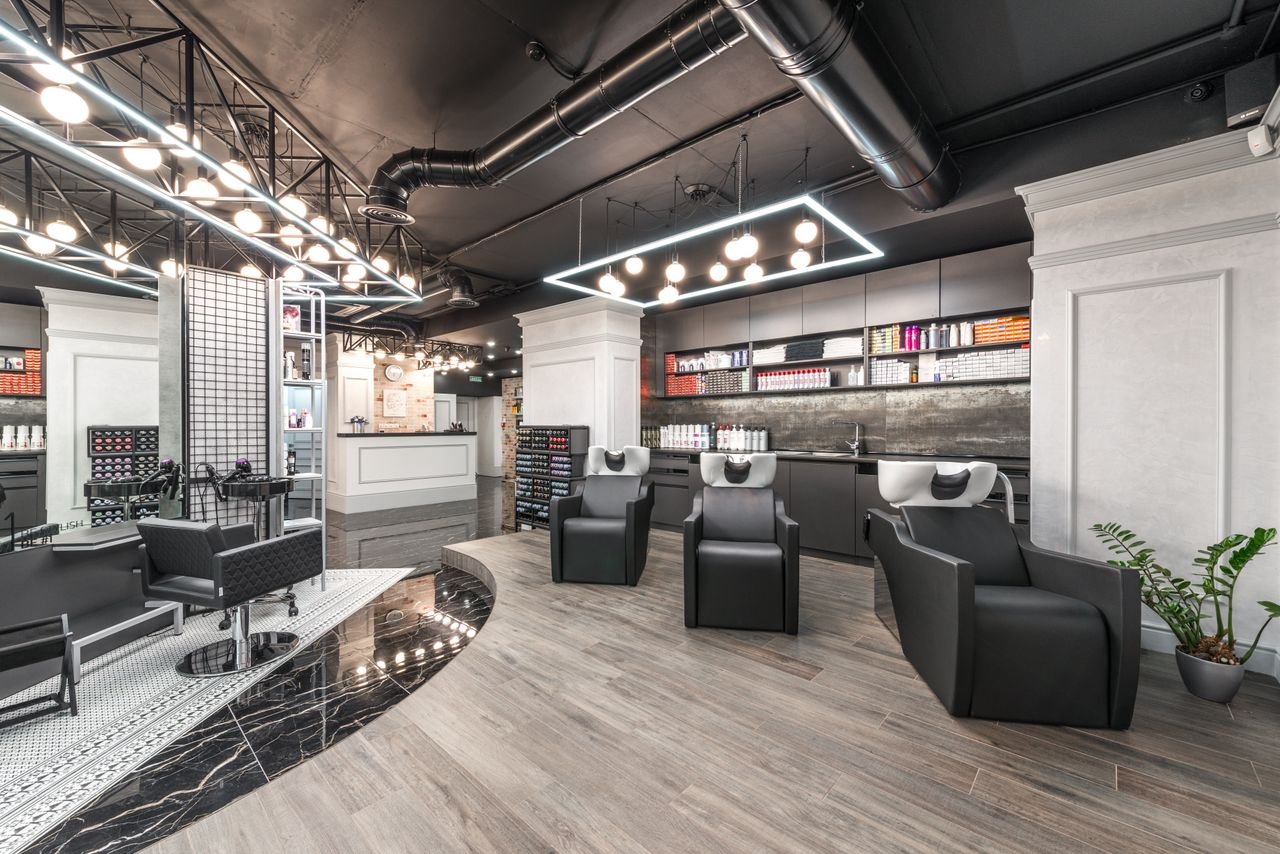
Start with the clients already in your chair
1. Rebook before they stand up. This is the highest-value marketing move in the building and most stylists skip it because it feels pushy. It isn’t. “You’ll want a trim in six weeks, so let’s grab a Thursday now while I’ve got them” is a service, and a salon that rebooks 70% of clients at checkout has a completely different revenue curve than one rebooking 30%. Track your rebooking rate per stylist. Post it in the back room. It will go up.
2. Pre-book the next three, not the next one. For colour clients on a regular cycle, book the next three appointments at once. They can always move one. What they can’t do is forget you exist for four months and end up somewhere closer to their office.
3. Fix your no-show policy. A card on file and a 24-hour cancellation window isn’t marketing, but every empty slot is an unpaid marketing problem. Salons that hold a card see no-shows drop by roughly half, and those recovered hours are worth more than any campaign on this list.
4. Ask for the referral out loud. Referral cards on the front desk get ignored. A stylist saying “if you know anyone who’s been putting off a big colour change, send them to me, I’ll take care of them” while the client is still in the chair does not get ignored. Add a specific reward if you want (a free treatment add-on for both people works better than money off), but the ask matters more than the reward.
5. Sell the retail you already recommend. If you tell someone to use a purple shampoo and then don’t have it at the desk, you’ve done the marketing for Sephora. Retail is a 10 to 15% of revenue line for salons that treat it seriously and near zero for salons that don’t. Bundle the products you used into the service ticket as an opt-out, not an opt-in.
6. Take the photo. Every finish is a piece of content and a piece of proof. Set up one spot with decent light, a neutral wall, and a ring light if the room is dim. Two seconds. Ask permission, take the shot, done. You’ll use these everywhere else on this list.
7. Build a client note habit. Kids’ names, the trip they’re saving for, the colour they hated in 2023. Whether it lives in your booking software or a notebook, the salons people drive past three others to get to are the ones that remember. This is retention marketing. It’s boring and it works.
Social media, without it eating your week
This is where most salon marketing advice goes wrong. It tells you to post every day, jump on every trend, and go live on Thursdays. Nobody with a full column does that for more than three weeks.
The salons that win on Instagram and TikTok aren’t posting the most. They’re posting consistently, from a stock of content they built in one sitting, and they’ve stopped treating the feed as something that has to be done live.
8. Batch a month of posts in one afternoon. Once a month, block two or three hours. Pull the transformation photos from idea #6, write 12 to 16 captions, and load them all into a scheduler. SchedPilot connects your Instagram, Facebook, TikTok and whatever else you use, so you upload each photo once, write the caption once, and pick which accounts it goes to. Then the feed runs for four weeks while you’re doing hair.
9. Before-and-afters, but with the story. “Colour correction” gets a like. “She came in with box dye black from a breakup in March, wanted to be blonde by her sister’s wedding in June, and we did it in three sessions without frying it” gets saved and sent to a friend. Lead with what the client wanted and what was in the way.
10. Show the process, not just the result. Foils going in. The toner rinse. The moment the cape comes off. Ten-second clips shot on a phone, no editing. These outperform polished content for salons because they answer the question a new client is actually asking: what is it going to be like sitting in that chair for three hours?
11. Answer one client question per week. “Why does my blonde go brassy?” “How often should I really wash my hair?” “Is a Brazilian blowout worth it for fine hair?” You answer these twenty times a week in person. Answering once on camera, and then scheduling it, turns a repeated conversation into a post that pulls in the exact people who’d book you.
12. Post your availability. “Two openings Thursday afternoon with Jess” is not embarrassing. It’s the most direct-response post a salon can make, and it fills gaps that would otherwise be empty. Stories are the right place for this.
13. Use a recurring weekly slot. “Transformation Tuesday” is a cliché because it works. Pick one or two fixed formats (a client feature on Tuesdays, a product Friday), write eight of each in a batching session, and let them run. Followers learn the rhythm and you stop staring at a blank caption box.
14. Introduce every stylist, every quarter. New followers don’t know who Jess is. A short “meet the team” post per stylist, rerun every three months with a fresh photo, does more for bookings than another trending audio. Clients book people, not salons.
15. Reply to every comment for the first hour. If you’re going to schedule posts (you should), set a phone alarm for when the big ones go out and spend ten minutes in the comments. Early replies push reach, and a stylist answering “how much would this cost?” in the comments is a booking that wouldn’t have happened otherwise.
Free trial · No upfront payment · 10+ platforms
Try SchedPilot for free
Post on 10 platforms at once. Great for influencers, marketers, agencies.
Google is where new clients actually find you
Instagram is where people decide they like you. Google is where they find you in the first place. “Hair salon near me” and “balayage [your city]” bring more new walk-ins than any social platform, and most salons treat their Google Business Profile as something they set up once in 2019.
16. Ask for a Google review at checkout, with a QR code. Not a text three days later. A small card or a sign at the desk with a QR code that goes straight to the review form, and a stylist saying “if you’re happy with it, this helps me a lot.” Salons that do this systematically go from 40 reviews to 300 in a year, and review count is one of the strongest signals in local search.
17. Reply to every review, including the bad ones. A calm, specific reply to a two-star review (“I’m sorry the toner didn’t hold, I’d like to fix this, please call me directly”) does more for a prospective client than the ten five-star reviews above it. It shows what happens when something goes wrong.
18. Add photos to your Google profile monthly. Same transformation photos from #6. Profiles with fresh photos get more clicks to the booking link, and it takes five minutes. Put it in the same monthly block as the social batching.
19. Write one page per service you want more of. If you want more extension clients, you need a page on your site that says “hair extensions in [city]” and explains the process, the price range, and what to expect. One page, 500 words, real photos. Most salon websites have a single “Services” page listing 40 things, which ranks for none of them.
20. Get your booking link everywhere. Instagram bio, Google profile, Facebook page, email signature, the sticker on the mirror. If someone has to DM you to find out how to book, some percentage of them won’t.
Email and text, the channels salons ignore
21. Send a monthly email that isn’t a promotion. One transformation, one product you’re loving, one thing happening in the salon, one link to book. That’s it. A 300-person list opened at 40% is 120 people reminded you exist, and the clients who’ve drifted to eight weeks are the ones who click.
22. Text the lapsed clients. Pull everyone who hasn’t been in for 90 days. Send a personal-sounding text from the stylist, not a blast. “Hey Maria, it’s Jess at Studio K, been a while! I’ve got a Saturday morning open next week if you want it.” Expect 10 to 20% to book. That’s a better return than any ad.
23. Build a waitlist for your best stylist. If Jess is booked three weeks out, that’s not a problem, it’s a marketing asset. “Jess is currently booking for October” on the website and in her bio signals demand, and a waitlist form captures the people who’d otherwise leave.
Around town
24. Partner with two local businesses. The bridal shop, the photographer, the gym, the wine bar that does a Friday thing. Cross-post each other, leave cards, and do one joint event a year. A photographer who sends you every bride she shoots is worth more than a year of Instagram ads.
25. Host one thing. A colour education night, a “bring a friend” Sunday, a fundraiser blowout bar. Once or twice a year. It gives you a month of content before and after, gets covered in the local Facebook groups, and puts new people physically in the space, which is the hardest part of salon marketing.
Free trial · No upfront payment · 10+ platforms
Try SchedPilot for free
Post on 10 platforms at once. Great for influencers, marketers, agencies.
What a realistic month looks like
Pulling this together, here’s what a solo owner or a small team can actually sustain:
- Rebooking, referral asks, and review requests happen at every checkout. No extra time, just a habit.
- One afternoon a month, batch and schedule the social posts, upload new photos to Google, and send the email.
- Once a quarter, text the lapsed list and refresh the team intros.
- Once or twice a year, an event or a partnership push.
That’s maybe five hours a month of work that isn’t standing behind the chair, and it compounds. The salons that struggle are usually the ones doing marketing in the gaps: posting when a client cancels, running a discount when the week looks thin, asking for reviews when they remember. The ones that stay booked decided what the routine was and let a scheduler and a few checkout habits carry it.
If you want to start with the social media part, SchedPilot’s free trial is enough to batch and schedule your first month. Load it up on a Monday afternoon and see what a feed that runs itself feels like.
Free trial · No upfront payment · 10+ platforms
Try SchedPilot for free
Post on 10 platforms at once. Great for influencers, marketers, agencies.
Related posts
Hair Salon Marketing Ideas That Actually Bring in New Clients
September 12, 2026
Nutrition Marketing on Social Media: 9 Content Ideas You Can Batch in One Afternoon
September 12, 2026
Best Time to Post on Instagram in NZ (2026): Hours by Day in NZST/NZDT
September 12, 2026
Best Time to Post on Instagram in South Africa (2026): Hours by Day in SAST
September 12, 2026